Galvalume® vs. Galvanized Metal Roofing

Galvalume® vs. Galvanized Metal Roofing

Selecting metal panels made from high-quality materials is essential to the longevity and success of your customer’s metal roofing system—from the steel sheets to the fasteners. Although the quality of the paint system applied to metal roofing panels provides an essential level of protection (as discussed in our recent ‘Decoding Your Warranty’ blog series), not to be overlooked is the coating used on metal roofing panels. Two coatings are commonly used on steel sheeting in the metal panel industry today: Galvalume® and Galvanized. Both products are manufactured to adhere to carbon sheeting and provide a barrier that resists corrosion. Additionally, they enhance long-term water-tightness and durability, ensuring resilience through damaging weather conditions. But what exactly are the differences between Galvalume® and Galvanized?

What is Galvalume® metal?

Introduced into the construction marketplace by Bethlehem Steel in 1972 and now widely available around the world, Galvalume® is carbon steel sheeting coated with aluminum-zinc alloy by a continuous hot-dip process. Composed of 55 percent aluminum and approximately 45 percent zinc, this coating combines the best properties of both metals. It has the corrosion resistance, high temperature oxidation resistance and heat reflectivity typical of aluminum coatings, with the formability and galvanic protection of cut edges characteristic of zinc coatings. This combination makes it ideal for most types of roofing and siding. In addition, the coating also contains a small but significant amount of silicon in the alloy—not to enhance the corrosion performance, but to ensure optimal coating adhesion to the steel substrate when roll-formed, drawn or bent during fabrication.

 What is Galvanized metal?

Galvanized Sheet is carbon steel sheet coated with zinc on two sides by a continuous hot-dip process. This method tightly adheres the coating to the steel with an iron-zinc alloy bonding layer formed by a diffusion process while the heated steel strip is in contact with the molten zinc.

What is the difference between Galvalume® & Galvanized roofing?

While both products were developed to essentially sacrifice themselves to protect the steel sheeting they coat, the above exposure comparison shows that Galvalume® performs (up to nine times) better in fighting corrosion as compared to Galvanized coating. While Galvalume® can initially show signs of corrosion faster than Galvanized, it has a sacrificial property that will prevent the corrosion from growing whereas once corrosion has started on a Galvanized panel, it can continue to corrode until panel integrity is lost. According to a study released by the Metal Construction and Zinc Aluminum Coaters associations, the longevity of a low-slope unpainted Galvalume® standing-seam roof is 60 years  (See the full report.)  Additionally, primer and paint adhere better to Galvalume®-coated panels and they carry a 20-year limited warranty while galvanized panels do not, making them a smarter long-term investment for your customers’ homes, agricultural buildings or commercial properties.

Important Facts About Galvalume®

  • Galvalume® should not come in direct contact with: standing water, dissimilar metals (copper, lead, iron), harsh chemicals, graphite pencil, masonry products or treated lumber.
  • Proper roof inspections and maintenance is still required, as with any other roof system.

Its versatility, ease of use, aesthetic appeal and long-term, service life-extending performance makes Galvalume-coated steel roof panels the most economical and sustainable coating option for your customers’ new and retrofit applications. To learn more about Galvalume®, please visit  http://www.galvalume.com/. To view ABC’s Galvalume® Plus products, which are easy to form and install safely due to the thin, clear acrylic coating that allows them to be roll-formed dry without vanishing oil, please see our color resources and Galvalume® warranty information.

Spotlight on Underlayment: Synthetic vs Felt

What’s under your customer’s metal roof matters.

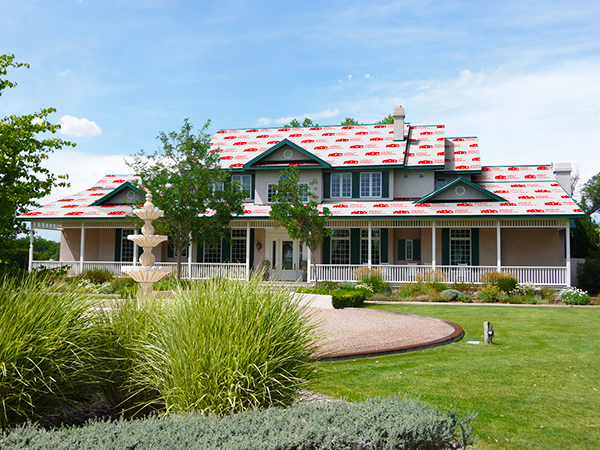
Roof underlayment is the first layer of material laid prior to the metal roofing panels. It separates the roof covering from the roof deck, thus protecting it from detrimental resins, unevenness and—in re-roofing applications—fasteners and other old building materials. This water-shedding layer also provides secondary protection from weather, shields the roof deck during construction and is often required for warranty adherence and for roofs that must meet Underwriter’s Laboratory (UL) fire ratings. Outside of its traditional use, synthetic underlayment can also offer a myriad of benefits for your customers.

Synthetic vs Felt

Felt underlayment, also known as “felt paper” has been the traditional underlayment of choice for decades. It was used to prevent damage to the roof covering caused by sap leakage from wooden building materials, however—as even most wood structures are now constructed using plywood or other, non-wood materials—this is no longer an issue. Felt underlayment is saturated with asphalt composed of volatile compounds that dissipate over time. This makes it more fragile and likely to absorb moisture, which further weakens the roof. This deterioration is accelerated when asphalt is exposed to UV rays, heat, poor ventilation and less energy-efficient roof coverings. Additionally, the crude oil refining techniques that previously resulted in the creation of asphalt as a byproduct, now extract the maximum amount of product from the crude resource. As a result of this advancement in the refining process, only a powder-like residue that is not conducive to the development of asphalt is generated. Consequently, more customers are turning to a synthetic alternative for a longer-lasting, economically-efficient solution.

Compared to traditional organic felt, synthetic underlayment is significantly more lightweight, permitting many more squares per roll, which makes it an economical solution for your customers. While non-woven materials are generally moisture permeable, woven scrim synthetic roof underlayment greatly enhances tear resistance and ease of installation. While it can be designed to be moisture-permeable, synthetic underlayment is typically manufactured as a barrier that doesn’t absorb moisture, making it resistant to fungal growth and wrinkling.

Underlayment Requirements and Resources

Although synthetic underlayment may be the superior choice for your customers, it is imperative that its use does not violate building code requirements or manufacturer’s warranties for the intended roof covering and that it is installed according to the manufacturer’s provided instructions.

The International Code Council (ICC) has developed a single set of comprehensive and coordinated national model codes and standards used in the design, build and compliance processes to ensure the safe, sustainable and affordable construction of structures. The ICC’s set of International Codes (I-Codes) are available for purchase, and include, among others:
·         International Building Code (IBC)

  • International Energy Conservation Code (IECC)
  • International Fire Code (IFC)
  • International Green Construction Code (IgCC)
  • International Residential Code (IRC)

Of particular importance to the roofing industry are the IRC and IBC I-Codes. These codes include specific underlayment requirements and installation/ attachment directions for simple enforcement by inspectors. Provided in Chapter 9 of the 2015 IRC and Chapter 15 of the IBC, they cover material types, application and attachment requirements, including specific information for metal panels with denotations for variances specific to high-wind areas.

Because of the wide variety of underlayment and metal panel styles, the IRC and IBC require installation according to manufacturer’s instructions. In the absence of manufacturers’ instructions and/ or when using alternative materials, the specific requirements outlined in the IRC and IBC I-Codes should be used where applicable. Remember, a metal roof is designed to have a long service life, and the underlayment’s service life should at least match that of the metal roof. Don’t allow your customers to be shortsighted when designing for longevity by using an underlayment not guaranteed to last for the duration of their roof.


ABC Underlayment

Advantages of Underlayment

Woven, coated polypropylene synthetic underlayment fabric is not only designed to protect against weather damage, but also provides greater strength, a longer UV exposure window and more secure surface for installation safety. Some underlayment options are 100 percent recyclable and up to 25 degrees cooler than asphalt felt, which can result in decreasing energy costs for your customers. At one-fourth the weight of traditional felt, but up to 20 times stronger, it ensures longevity that can’t be matched using traditional felt, particularly in areas that experience extreme heat and weather events. To prevent downhill slide during installation, underlayment is manufactured with anti-skid coating on both sides, ensuring a more sure-footed feel is achieved once attached. In addition, underlayment is certified to withstand up to six months of exposure to the sun and other weather elements before the final roofing material must be laid.

Learn More

For more information on ABC’s metal roof and wall products and for more tips on underlayment, please contact your local ABC sales representative.


Decoding Your Warranty: Paint Chalking

The third and final element of our “Decoding Your Warranty” blog series covers paint chalking. As with fading, chalking is an expected occurrence with any paint system that is subjected to outdoor exposure, and while it may be preferable to other issues such as cracking or peeling, it is still important to the metal roofing industry and its customers. As a result, similar questions should be asked about how this is addressed in paint system warranties to ensure chalking isn’t the cause of premature damage to your metal roof system.

What is paint chalking?

Also referred to as “powdering”, chalking happens when the resin (binder) of the paint system is compromised. The resin is the substance that holds the paint pigment together. It also ensures the color is evenly distributed and provides glossiness, durability and flexibility. In addition, resin has the very important job of adhering the pigment to the metal surface it’s applied to and protecting the finish against damage.

When the resin at the surface of the paint finish deteriorates, most often as a result of exposure to ultraviolet (UV) rays, the embedded pigment particles lose their adhesion to the paint film (resulting in color fading) and the resin particles take on a white (chalky) appearance that is easy to wipe off of the surface. In addition, chalking can erode the film resulting in a loss of substrate protection and run down onto the underlying structure, further degrading the appearance of your structure.

How can you protect against paint chalking?

Climates that are exposed to more intense UV rays for longer periods of time will experience chalking sooner as the environment plays a big role in how painted metal will perform. While you may not be able to control how much UV or moisture exposure your roof gets, you can choose a paint system that is not over-thinned or over-spread and that uses high quality components. ABC’s Signature® 200 system incorporates a 30 percent SMP Resin—one of the strongest in the marketplace—to help reduce the amount of chalking experienced.

Similar to the fading section of the warranty, paint system warranties allow for an acceptable amount of chalking. Chalking is measured in accordance with the standard procedures as defined by the “Standard Methods of Evaluating Degree of Chalking of Exterior Paints”, ASTM D4214. ABC guarantees the level of chalk on vertical panel applications will not chalk in excess of a numerical rating of eight (the higher the numerical rating, the better) for 30 years for our Premium paint system colors and 25 years for our Select40 paint system colors. For non-vertical panel applications, ABC guarantees a rating of 6 for 30 years for our Premium paint system and 25 years for our Select40 paint system. Consumers should be aware of these numbers, and expect them to be expressed in sample warranties.

Check out ABC’s metal color resources and warranty information to learn more!


Missed parts one and two of the “Decoding Your Warranty” blog series? Start reading now!

MCOMP-108 ABC Warranty Blog Series_CTA Button Graphics-PART1

Decoding Your Warranty: Paint Fade Protection

Will a Metal Roof Lose its Color?

Paint fading is one of the biggest concerns voiced by metal roofing customers. Over time, all paint systems will fade so it’s important for your customers to understand how warranties can protect their investment. Buying a red roof that prematurely fades to pink is unfortunate enough, but this is made even worse by a warranty that doesn’t adequately protect their purchase.


ABC WARRANTY INFORMATION: PAINT FADING


Why does paint fading matter?

The paint on your customer’s metal roof or wall isn’t just for decoration. In addition to providing color, the paint finish also protects the panels from corrosion, temperature, moisture and other detrimental environmental elements. Fading is the most common source of color change over time and happens when environmental elements deteriorate the paint’s pigment (granular particles that give the paint its color). This deterioration also reduces the paint’s effectiveness in protecting metal panels.

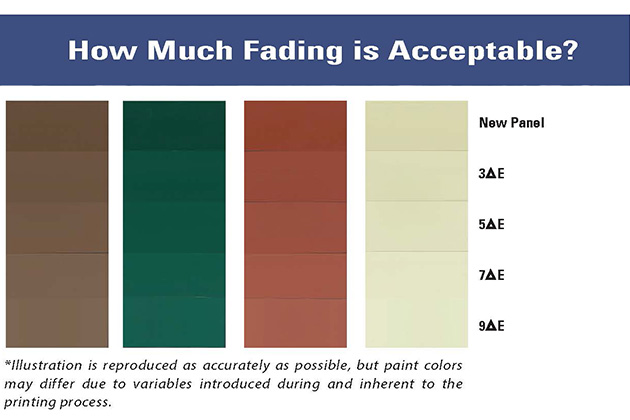
Paint fading is measured by the American Society of Testing Materials’ (ASTM’s) Hunter unit (∆E) standard, which compares the faded color to the original. In accordance with ASTM Standard D2244, one Hunter Unit is equal to the smallest amount of change visible to the naked eye.


What do you need to look for in your warranty?

Selecting a product with a 40-year warranty is a great start, but not all panels, paint systems and warranties are created equal. Your customers should make sure that the manufacturer provides a warranty which clearly defines the number of Hunter units the paint system is allowed to change for both vertical (wall) and horizontal (roof) applications. This is critical when comparing one painted metal roof or wall against another. The lower the number of Hunter Units expressed in the warranty, the better the paint system will resist fading.

ABC’s Premium paint system warranty guarantees paint will not fade in excess of five units in vertical applications and seven units for non-vertical applications over the course of 30 years, with the exception of Radiant Red. ABC’s fading specification on all colors available in our Select40 paint system guarantees protection for the same degree of fade as guaranteed in the Premium system, but for 25 years. Check out ABC’s color resources and warranty information to learn more!


What’s next?

Understanding the film integrity and fading for metal panels is very important, but it doesn’t end there. In the final installment of our “Decoding Your Warranty” blog, we will uncover a third consideration that can help you and your customers understand metal roofing and siding warranties: chalking.

MCOMP-108 ABC Warranty Blog Series_CTA Button Graphics-PART3

Decoding Your Warranty: ABC Paint Film Integrity

With a 40-year limited paint system warranty, the ABC Signature® 200 offering represents one of the most sophisticated siliconized, modified polyester (SMP) paint coating and warranty protection products in the industry. But do you understand what it means to have a 40-year warranty?

To comprehend your coverage options, you first need to know what a “40-Year Warranty” means in the industry. This limited warranty covers the film integrity of the paint system used on your wall and roof panels in case of cracking, checking and peeling for a period of 40 years. Most manufacturers of metal roofing have this basic warranty available, however—as with any warranty—the most miniscule details can impact the overall effectiveness and value.

To select the right protection for roofing or building projects, ask questions to confirm your understanding of the warranty coverages and options before purchase. Some pertinent questions to consider include:

  • Are there any exceptions to the warranty?
  • Are all colors covered?
  • What are the limitations of the warranty?
  • What are the financial implications of not abiding by the warranty?

The answers to these questions and additional coverage information should be readily available and provided to you by the supplier. Keep in mind that all 40-year warranties—while generally similar—are not equal; it’s essential to thoroughly investigate the product’s warranty details to ensure the best property protection is received.

We encourage you to view ABC’s warranties on our website. You can also learn more about the proper handling of ABC’s metal panels by reading the product installation manuals. The precautions in the manuals can help save time, heartache and, of course, money.

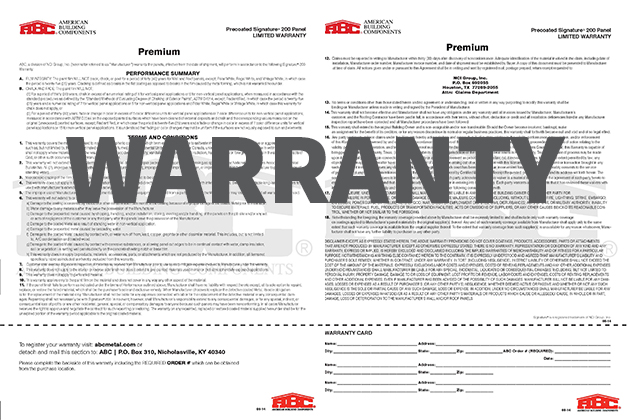
Warranty Image_RevA_032016

What’s next?

How well paint adheres to the substrate is not the only concern for many metal wall and roof panel consumers; homeowners often ask us about the fading of the paint system and the factors that should be considered when purchasing.

In the next installment of our “Decoding Your Warranty” blog, we will discuss fading in more detail and provide insight into this commonly overlooked factor in warranties.

MCOMP-108 ABC Warranty Blog Series_CTA Button Graphics-PART2

Which Metal Roof System Is Right For You?

Once you choose to invest in a metal roof, selecting the right system for your home can be a difficult decision. What are the major differences between different metal panel products? How can different panel profiles change the aesthetics of the roof on your home? What performance attributes do each have?

Best Metal Roofing Systems for Homes

The three main metal panel roof systems are standing seam, concealed fastening and exposed fastening. Each provides a unique appearance and benefits.

Standing Seam Metal Roof Systems

As one of the most durable and weather-tight roof systems available, standing seam roofs (SSR) offer a unique look with high seams that are raised above the metal panel to give it a sleek continuous design. The different types of standing seam metal roof systems are installed by either snapping the panels together or mechanically seaming with a machine, both of which eliminate penetration and allow for fewer places for leaks to occur. These beautiful profiles are common in the residential metal roofing market.

Concealed Fastening Metal Roof Systems

Great for reducing the weathering that naturally occurs with roofs, this system presents the same protection and budget friendly cost of the exposed panel system. Because the concealed fasteners are hidden below the panel, they are not exposed to normal weather conditions, which allow the panels to last longer. The concealed fastening metal roof is typically a snap-on batten option that has strong lines to create a clean, aesthetic appearance, giving your home great curb appeal.

Exposed Fastening Metal Roof Systems

This system, also known as through-fastened, is installed using screws of fasteners that penetrate the panels, leaving the screw heads exposed. As the traditional choice in the metal roofing industry, exposed fastening panels are most likely what you think of when you hear metal roofing or metal walls. This has led to them receiving a tainted reputation, often because of improper installation, which allows for leaks and premature rusting. But recently, exposed fasteners have made a comeback with watertight, neoprene washers which provide protection for the full life of the metal roof of your home.

Given the many roofing options in today’s market, it is imperative that you understand your choices before making a decision. If you’re having trouble deciding or want to learn more about the individual systems, contact a manufacturer’s representative to provide assistance. Their knowledge of the product is sure to guide you in the right direction.